
Blog

How to detect pain… Part 2!

A lot of my patients ask me, “How do you know where the pain is?” Picture this: You are standing in front of a large table topped with a cloth. Blindfolded. You’re asked to hold the two corners of the table cloth and create a wave – just like when you were a kid with the parachute. Even though you can’t see the cloth move, you can feel that it’s making a big wave with ease. Then imagine a cup of water is placed on top of the cloth. And you’re asked to do the same thing. But when you try to create the wave, you no longer feel the ease. Instead, there is an obstruction. And the air beneath the wave has to flow around the obstruction to get to the other side. This is exactly how injury works in the human body. Think of the table cloth as […]

Accidental Acupuncturist by Everyday Acupuncture

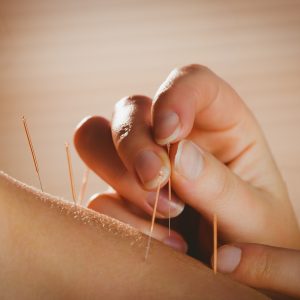
Recently, I did something I have never done before… It forced me to venture way outside my comfort zone. But it was a memorable experience nonetheless: I was interviewed for an American Acupuncture podcast show! I shared my thoughts on the integration of Eastern and Western intervention techniques for chronic pain management. We also chatted about where acupuncture fits in through the lens of modern day Scientific research. I found it difficult not following a script. But it was key to creating an organic and natural conversation surrounding everything from acupuncture to chronic conditions – and how I became an Acupuncturist accidentally. Want to know what you’ll hear during the interview? Here is just a glimpse at the golden nuggets we covered during our time together: ●  Your body is built to self-heal. But there is a specific wear-and-tear pattern that impacts your body’s natural ability to recover. Learn what […]

Effect of Somato-Sensory Training on Intra-Examiner Reliability in Determining the Evenness of Standardized Paired Blocks

Hypothesis 1.  Somatosensory calibration training improves the ability to determine evenness on standardized paired blocks. 2.  Somatosensory calibration training will increase intra-examiner reliability in determining evenness on standardized paired blocks. Statistical significance will be measured by using p ≤ .05. Abstract Objective / Purpose: Osteopathic medicine practitioners require reliable manual palpatory skills for identifying structural abnormalities (asymmetries).  Past osteopathic and non-osteopathic palpation training studies have shown poor inter-rater reliability and intra- rater reliability.   The objective of this study is to determine if a fabricated training tool (symmetrical) can help calibrate the somatosensory system.  The study looks at whether this tool improves a clinician’s ability to detect smaller differences in asymmetry and increase inter-reliability and intra-reliability. Methods: Testing and training will be performed by participant students from the year one through five classes at the Canadian College of Osteopathy (CCO). The study will include two groups (experimental condition group, and control group) and two […]